
Buying
Deed-Restricted Housing in Jackson: 2-for-1 Bonuses, Habitat, and How the Pieces Fit
Sophie Dolan — October 5, 2026
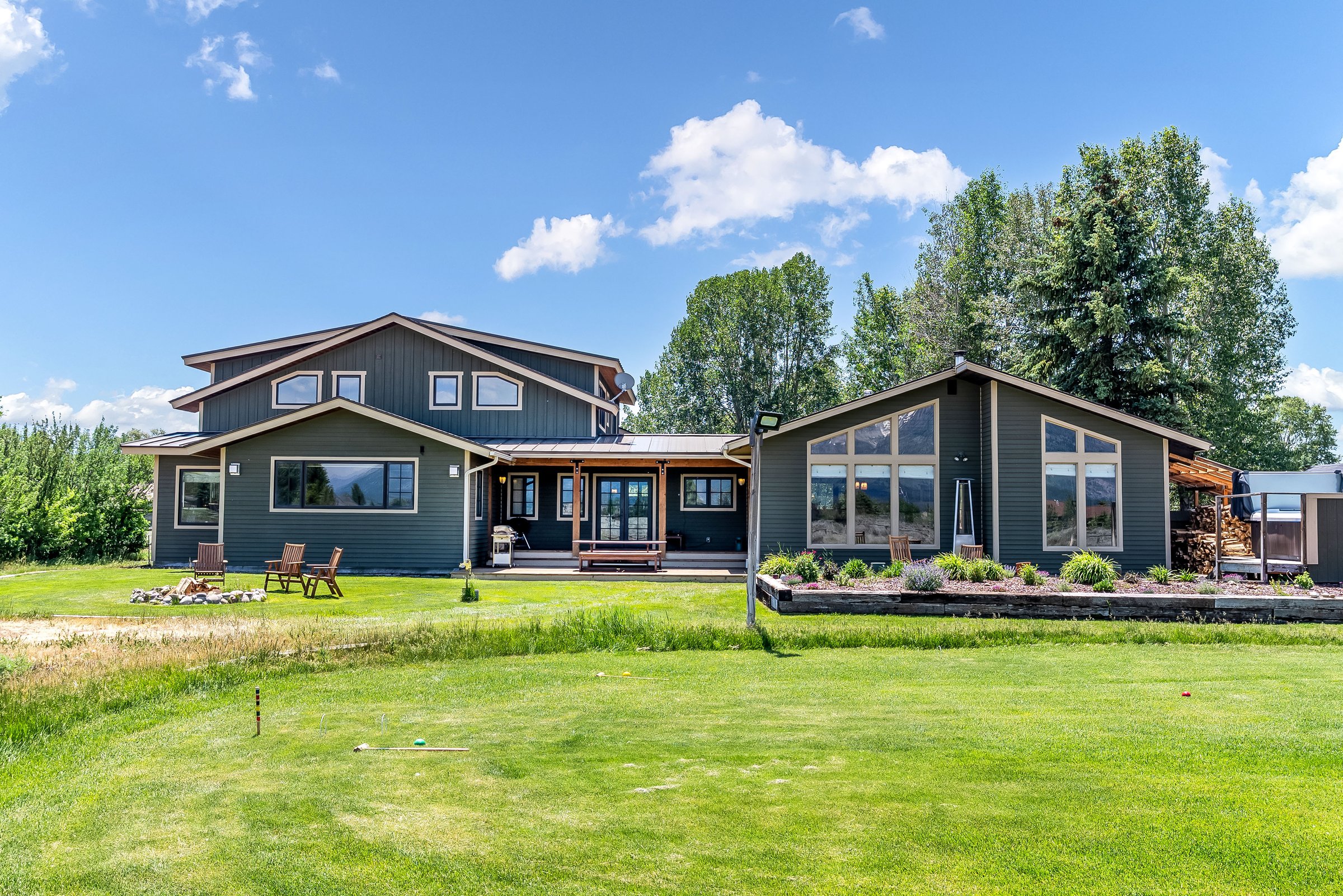
A deed-restricted home in Jackson is a home you can buy below market price in exchange for a few rules: you work locally, you live there, and its resale value can only grow so much each year. These homes come from a handful of different sources, and two recent stories in the news, Arts District South downtown and Habitat's plan for South Park, show how two of those sources work.
If you live and work here and the open market feels out of reach, this is the path worth understanding. Here's how the pieces fit together.
What "deed-restricted" actually means
A deed restriction is a legal document recorded against a property that controls how it can be used. In Jackson and Teton County, deed restrictions limit who can live in a home, what they can earn in some cases, and what the home can resell for, so it stays attainable for the next local buyer, not just the first one.
The key tradeoff is appreciation. Under the Jackson/Teton County Housing Rules and Regulations, resale appreciation on ownership units is capped at CPI, with a maximum of 3% a year, compounded. You build some equity, but you're not riding the open market up. That's the deal that keeps the next sale within reach for another local family.
The two main categories: Affordable and Workforce
Most newer ownership units fall into one of two buckets.
Affordable. These have income limits, set in tiers based on median family income (MFI). The current rules include ranges from 50% to 80%, 80% to 120%, and 120% to 160% of MFI. Each unit is assigned to a tier, so the price and the eligible income range go together.
Workforce. These have no income cap. Instead, at least 75% of your household's combined income has to come from a local business. They're meant for people who earn too much for Affordable units but still can't compete on the open market, which in Jackson describes a lot of people.
There are also older categories you'll still see on resale, like Employment-Based and Attainable units, which follow their own legacy rules.
Who qualifies
The rules vary by category, but a few requirements show up across the board:
- Local work. At least one adult in the household has to work an average of 30 hours a week, or 1,560 hours a year, for a local business.
- No other local property. You can't own residential real estate within 75 miles driving distance of the Town of Jackson.
- Ongoing compliance. Owners provide annual documentation showing continued local employment, occupancy, and non-ownership of other residential property.
Buyers are generally chosen by a weighted drawing rather than first come, first served. The Housing Department sets the weighting factors, and critical service providers like EMTs get additional weight. So getting registered and qualified ahead of time matters more than being fast on a listing.
Where the homes come from
There are three main groups producing deed-restricted homes here, according to ShelterJH:
- The Jackson/Teton County Housing Department, which runs publicly funded projects and manages the drawings.
- The Jackson Hole Community Housing Trust, which builds below-market homes for sale and rent.
- Habitat for Humanity of the Greater Teton Area, which builds for households earning under 80% of MFI.
And then there's a fourth source that's easy to miss: private developers who build deed-restricted space as part of a market-rate project. That's where the 2-for-1 bonus comes in.
Case study 1: The 2-for-1 bonus at Arts District South
The town's 2-for-1 bonus is a trade. A developer gets to build extra market-rate square footage in exchange for building deed-restricted workforce housing. For every square foot of workforce housing, they get two square feet of market-rate.
Arts District South, at Simpson Avenue and Millward Street downtown, is a good example. The Planning Commission unanimously approved the project in September: 35 condos across four buildings, about 52,000 square feet in total, with a mix of market-rate condos, workforce units, and short-term rentals. Using the bonus, the developer gets roughly 20,000 square feet of market-rate space in exchange for 10,000 square feet of workforce housing.
Here's where it got interesting. Commissioner Laura Bonich, a former Housing Supply Board chair, pointed out that more than 4,000 of those 10,000 workforce square feet went to hallways and storage rather than livable space. "The 2-for-1 wasn't intended to build storage," she said.
The project's architect, Karen Parent, pushed back: "All of us have lived here long enough to know that we need storage for our toys and gear." Fair point, anyone who's tried to fit skis, bikes, and a paddleboard into a small condo knows it.
Bonich asked town staff to confirm the project complies with the 2-for-1 policy before Town Council takes it up in early November, and developer Doug Halsey said he'd adjust if needed.
Why this matters to you as a buyer: the 2-for-1 bonus puts deed-restricted units right downtown, in buildings alongside market-rate homes. But how the square footage gets counted affects how much livable space you actually get. It's worth watching how the council handles this, because it could set the standard for future projects.
Case study 2: Habitat's 193 homes in South Park
On the other end of the spectrum is Habitat's plan for northern South Park. Habitat estimates it will take about 10 years to build 193 homes, at roughly 20 homes a year.
A few details worth knowing:
- The homes: A duplex plus three-, four-, and five-unit buildings with tuck-under parking. Units run 1,200 to 1,300 square feet.
- Who they're for: Households earning 30% to 80% of Teton County's median family income. For a two-person household, that means earning less than $95,040.
- How people are chosen: Habitat looks at housing need, willingness to volunteer, and ability to repay.
- Funding: The Hughes Charitable Foundation put up a $15 million challenge grant that matches donations dollar for dollar.
- Construction: Habitat is moving to modular units built off-site. CEO Ben Johnson says the main benefit is time savings, not necessarily lower costs in a remote area like ours.
Those 193 homes are about 70% of the 557 homes planned for the Gill family's northern South Park development. The Jackson Hole Community Housing Trust will build the rest of the affordable units there.
Ten years is a long runway. If you're in Habitat's income range, the takeaway is to get on their radar now, not when the first building goes up.
How the pieces fit
Put it all together and you get a fairly clear map:
- If your household earns under 80% of MFI, Habitat and the lower Affordable tiers are your main options.
- If you're in the middle, up to 160% of MFI, the higher Affordable tiers and Housing Trust homes are worth watching.
- If you earn more but most of your income comes from local work, Workforce units, including the ones created through the 2-for-1 bonus, are built for you.
No matter which bucket you're in, the first step is the same: get qualified with the Housing Department so you're eligible when a drawing opens.
My take
Deed-restricted housing is one of the few realistic ways for working locals to own in Jackson. It isn't a perfect system, and the Arts District South debate shows people are still figuring out how to count what "workforce housing" really means. But between Habitat's long-term plan, the Housing Trust, and the 2-for-1 bonus, there are more paths in than there were a few years ago. The people who benefit most are the ones who understand the rules early and are ready when their chance comes up.
FAQ
Can I sell a deed-restricted home for whatever I want? No. Resale appreciation is capped at CPI, up to 3% a year compounded, and the buyer has to qualify under the same deed restriction. You build some equity, but not at open-market rates.
Is there an income limit for Workforce units? No. Workforce units don't have an income cap, but at least 75% of your household's income has to come from a local business, and you can't own other residential property within 75 miles driving distance of Jackson.
How are buyers chosen? Most units go through a weighted drawing run by the Housing Department, not first come, first served. Habitat runs its own selection based on need, willingness to volunteer, and ability to repay.
Have questions?
If you're trying to figure out whether deed-restricted housing, a market-rate home, or something over the hill makes the most sense for you, I'm happy to talk it through. Reach out anytime at sophie.dolan@evrealestate.com.